50 Idioms For Hands With Meaning, Examples & Other Ways To Say
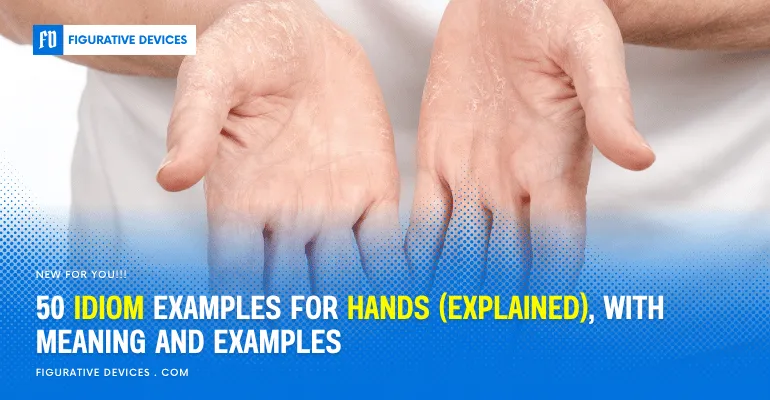

At 7:00 a.m., the workshop opens with palms on benches, fingers on tools, wrists near levers, and knuckles close to unfinished work. One worker turns a locked plan into action, another steadies a loose task with a firm grip, and the whole room moves from empty hands to useful hands. These 50 original idioms for hands move through skill, control, humor, speed, long-form effort, and hand-and-leg teamwork.
What are the idioms for hands?
The idioms for hands are Fingers Find the Door, Palm Holds the Spark, Knuckles Count the Cost, Wrist Turns the Weather, Thumb Marks the Trail.
1. Fingers Find the Door
Meaning:
A person discovers the right method through careful touch, trial, and practical skill.
Example:
During a phone repair, the technician tested 3 ports, found the loose connector, and proved that fingers find the door.
Other ways to say:
skilled hands find access, careful fingers open progress, active palms solve it, not idle hands, not hands-off guessing.
2. Palm Holds the Spark
Meaning:
A person controls a small idea before it becomes a useful result.
Example:
A startup founder wrote 5 rough product notes, tested 1 clear feature, and showed that the palm holds the spark.
Other ways to say:
creative hands protect the idea, ready palms hold value, live fingers shape the start, not empty-handed, not cold-handed.
3. Knuckles Count the Cost
Meaning:
Hard work reveals the true price of a task.
Example:
A carpenter sanded 12 cabinet doors by hand and learned that knuckles count the cost.
Other ways to say:
working hands know the price, worn knuckles measure effort, firm fists face labor, not soft hands, not untouched palms.
4. Wrist Turns the Weather
Meaning:
A small controlled action changes the mood, pace, or outcome of a situation.
Example:
A chef adjusted the sauce with 1 quick stir, and the kitchen proved that the wrist turns the weather.
Other ways to say:
steady hands shift the result, quick wrists change the tone, trained fingers guide control, not stiff hands, not passive palms.
5. Thumb Marks the Trail
Meaning:
A clear sign, habit, or decision shows the next step.
Example:
A warehouse manager tagged 40 boxes by priority, so every picker saw how the thumb marks the trail.
Other ways to say:
hands leave direction, thumbs set the path, fingers mark the route, not lost hands, not unmarked palms.
6. Grip Carries the Load
Meaning:
Consistency and responsibility keep a difficult job moving.
Example:
A delivery team handled 80 orders in heavy rain because grip carries the load.
Other ways to say:
strong hands hold duty, firm palms carry weight, steady fingers keep control, not loose hands, not dropped work.
7. Fist Guards the Grain
Meaning:
A person protects valuable resources from waste, loss, or careless handling.
Example:
A farm supervisor checked every sack before storage because the fist guards the grain.
Other ways to say:
protective hands save value, closed palms guard supply, careful fists prevent loss, not open-handed waste, not careless fingers.
8. Hand Measures the Moment
Meaning:
Good timing comes from practical judgment, not noise or panic.
Example:
A surgeon paused for 4 seconds before the final stitch because the hand measures the moment.
Other ways to say:
skilled hands know timing, palms read pressure, fingers sense the right second, not rushed hands, not late palms.
9. Fingers Stitch the Chance
Meaning:
Small precise actions connect scattered opportunities into one useful result.
Example:
A tailor saved a torn jacket with 6 exact stitches, proving that fingers stitch the chance.
Other ways to say:
careful fingers join opportunity, working hands link pieces, palms repair progress, not broken hands, not loose grip.
10. Palm Catches the Clock
Meaning:
A person controls time by acting early and handling details fast.
Example:
An event planner booked 3 vendors before noon because the palm catches the clock.
Other ways to say:
quick hands save time, ready palms catch minutes, fast fingers hold the schedule, not late hands, not empty palms.
What are the best idioms for hands?
The best idioms for hands are Palm at the Helm, Fingers on the First Brick, Grip Before the Gear, Wrist with the Right Weight, Knuckles Above the Noise.
11. Palm at the Helm
Meaning:
A capable person controls the task with calm authority.
Example:
A project lead moved 6 teams through one product launch because the palm at the helm kept the work aligned.
Other ways to say:
guiding hands lead the work, steady palms direct action, skilled fingers steer the plan, not hands-off control, not loose leadership.
12. Fingers on the First Brick
Meaning:
A person begins with the foundation instead of chasing shortcuts.
Example:
A builder checked the base line before laying wall blocks because fingers on the first brick protect the whole structure.
Other ways to say:
practical hands start at the base, careful fingers set foundations, palms build from zero, not careless hands, not skipped steps.
13. Grip Before the Gear
Meaning:
Skill matters before equipment, tools, or expensive systems.
Example:
A photographer trained on framing first, then bought a new lens, proving grip before the gear.
Other ways to say:
trained hands beat tools, firm grip precedes machines, active fingers master basics, not tool-dependent hands, not empty technique.
14. Wrist with the Right Weight
Meaning:
A person applies exact pressure, not too much and not too little.
Example:
A baker folded dough 20 times with measured force because a wrist with the right weight creates better bread.
Other ways to say:
balanced hands apply pressure, steady wrists control force, precise palms set weight, not heavy-handed, not weak-handed.
15. Knuckles Above the Noise
Meaning:
Focused work rises above distraction, talk, and confusion.
Example:
In a busy print shop, one operator finished 300 labels while others argued; knuckles above the noise won the hour.
Other ways to say:
working hands ignore noise, firm fists stay focused, busy fingers beat chatter, not idle hands, not noisy palms.
16. Thumb on the True Line
Meaning:
A person keeps work aligned with facts, standards, or correct direction.
Example:
An architect checked 2 measurements before approval because the thumb on the true line prevents costly errors.
Other ways to say:
accurate hands keep alignment, thumbs check the mark, fingers follow the standard, not crooked hands, not off-line palms.
17. Hands in Clean Light
Meaning:
A person handles work transparently, honestly, and without hidden tricks.
Example:
A finance officer shared 12 receipts during the audit because hands in clean light create trust.
Other ways to say:
open hands show honesty, clear palms reveal work, visible fingers prove trust, not hidden hands, not dirty palms.
18. Palm Over the Plan
Meaning:
A person takes direct ownership of a plan and keeps it under control.
Example:
A restaurant manager checked staffing, stock, and seating before dinner service because the palm over the plan keeps pressure low.
Other ways to say:
responsible hands own the plan, steady palms manage details, firm fingers control tasks, not hands-off planning, not abandoned work.
19. Fingers Keep the Promise
Meaning:
Reliable action proves commitment better than words.
Example:
A mechanic finished the brake repair before 5:00 p.m.; fingers keep the promise better than a long speech.
Other ways to say:
working hands honor duty, dependable fingers prove words, active palms keep trust, not empty-handed promises, not idle talk.
20. Fist Without the Bruise
Meaning:
Firm control succeeds without harm, aggression, or wasted force.
Example:
A security supervisor calmed 2 angry customers with clear instructions, showing a fist without the bruise.
Other ways to say:
firm hands manage calmly, strong palms avoid damage, controlled fists protect order, not violent hands, not weak grip.
What are the funny idioms for hands?
The funny idioms for hands are Fingers Wearing Skates, Palm Hosting a Circus, Thumb Bossing the Buttons, Knuckles Knocking on Air, Wrist Doing Backflips.
21. Fingers Wearing Skates
Meaning:
A person types, moves, or handles things too fast and makes small mistakes.
Example:
A data clerk entered 9 invoice numbers wrong in 10 minutes; the fingers were wearing skates.
Other ways to say:
slippery fingers rush work, fast hands lose control, skating palms miss details, not steady hands, not careful fingers.
22. Palm Hosting a Circus
Meaning:
A person tries to handle too many tasks at once.
Example:
A café owner held a phone, receipt, marker, and cup in one hand; that palm was hosting a circus.
Other ways to say:
busy hands juggle too much, crowded palms hold chaos, overloaded fingers lose order, not empty hands, not calm grip.
23. Thumb Bossing the Buttons
Meaning:
A person controls a device, remote, or phone too aggressively.
Example:
During a meeting, one manager changed 14 slides in 2 minutes because the thumb kept bossing the buttons.
Other ways to say:
pushy thumbs command screens, restless hands control buttons, active fingers over-click, not hands-off, not gentle touch.
24. Knuckles Knocking on Air
Meaning:
A person makes effort in the wrong place with no useful contact.
Example:
A trainee searched the wrong drawer for 15 minutes; the knuckles were knocking on air.
Other ways to say:
misplaced hands miss the target, fists hit nothing, fingers search empty space, not accurate hands, not useful grip.
25. Wrist Doing Backflips
Meaning:
A person overcomplicates a simple hand movement.
Example:
A new barista spilled foam while making a basic latte because the wrist was doing backflips.
Other ways to say:
dramatic hands overwork movement, twisting wrists complicate action, restless palms add fuss, not simple hands, not plain grip.
26. Fist Packing Marshmallows
Meaning:
A person tries to look tough but acts gently or harmlessly.
Example:
A team lead raised a firm voice, then gave everyone extra break time; that fist was packing marshmallows.
Other ways to say:
soft fists pretend force, gentle hands wear armor, padded palms lack bite, not hard hands, not harsh knuckles.
27. Hands Arguing with Glue
Meaning:
A person gets stuck in a messy task and fights the material more than the job.
Example:
A school display board took 30 minutes because the hands were arguing with glue.
Other ways to say:
sticky fingers fight the task, trapped palms battle mess, busy hands lose freedom, not clean hands, not free fingers.
28. Fingers Counting Invisible Beans
Meaning:
A person tracks details that do not matter.
Example:
A supervisor spent 25 minutes debating the shade of a folder tab; fingers were counting invisible beans.
Other ways to say:
fussy fingers count nothing, picky hands chase tiny details, palms waste effort, not useful hands, not practical grip.
29. Palm Sneezing Confetti
Meaning:
A simple task creates a sudden, silly mess.
Example:
An assistant opened one overfilled envelope, and the palm sneezed confetti across the desk.
Other ways to say:
messy hands burst details, scattered fingers lose control, palms spill tiny chaos, not tidy hands, not closed grip.
30. Thumb Wearing a Crown
Meaning:
One small preference dominates the whole decision.
Example:
A designer rejected 6 layouts because one button felt wrong; the thumb was wearing a crown.
Other ways to say:
royal thumbs overrule work, picky hands control choices, dominant fingers decide everything, not balanced hands, not shared grip.
What are the short idioms for hands?
The short idioms for hands are Quiet Palm, Sharp Grip, Quick Wrist, Open Fist, Firm Fingers.
31. Quiet Palm
Meaning:
Calm skill handles pressure without noise.
Example:
A nurse placed 4 labels during a busy shift with a quiet palm and no error.
Other ways to say:
calm hands, steady palms, silent fingers, not shaking hands, not loud grip.
32. Sharp Grip
Meaning:
Clear control captures the main point fast.
Example:
A lawyer read 2 contract pages and found the risk with a sharp grip.
Other ways to say:
precise hands, focused palms, exact fingers, not loose hands, not dull grip.
33. Quick Wrist
Meaning:
Fast control fixes a small problem before it grows.
Example:
A driver corrected the steering in 1 second with a quick wrist.
Other ways to say:
fast hands, agile wrists, ready fingers, not slow hands, not stiff palms.
34. Open Fist
Meaning:
Strength stays available without becoming harsh.
Example:
A coach gave firm feedback and extra practice time, using an open fist.
Other ways to say:
fair hands, strong palms, controlled fists, not closed cruelty, not weak hands.
35. Firm Fingers
Meaning:
A person handles detail with discipline and accuracy.
Example:
A jeweler set 8 stones with firm fingers.
Other ways to say:
steady hands, exact fingers, reliable palms, not loose fingers, not careless hands.
36. Empty Palm
Meaning:
A person lacks proof, preparation, or useful material.
Example:
A sales rep arrived without samples, so the pitch began with an empty palm.
Other ways to say:
empty hands, bare palms, no grip, not prepared hands, not full fingers.
37. Swift Thumb
Meaning:
Fast selection or approval moves work forward.
Example:
An editor accepted 12 clean image files with a swift thumb.
Other ways to say:
quick hands, fast thumbs, ready fingers, not slow palms, not delayed grip.
38. Close Grip
Meaning:
A person keeps tight control over important details.
Example:
A site manager kept a close grip on safety checks after 2 loose cables appeared.
Other ways to say:
tight hands, guarded palms, firm fingers, not loose grip, not open-handed neglect.
39. Hot Knuckles
Meaning:
Urgent effort moves through pressure and speed.
Example:
A kitchen crew cleared 60 plates during lunch with hot knuckles.
Other ways to say:
busy hands, heated fists, working fingers, not cold hands, not idle palms.
40. Clean Palm
Meaning:
A person acts with honest handling and clear proof.
Example:
A contractor showed 3 supplier bills and kept a clean palm.
Other ways to say:
honest hands, clear palms, visible fingers, not hidden hands, not dirty grip.
What are the long idioms for hands?
The long idioms for hands are The Palm That Plans Before the Hammer Falls, Fingers That Fold Thunder Into Thread, The Grip That Keeps the Bridge Breathing, A Wrist That Turns Rust Into Rhythm, Knuckles That Knock Dust Off a Decision.
41. The Palm That Plans Before the Hammer Falls
Meaning:
Wise preparation prevents force, waste, and rushed repair.
Example:
A construction foreman checked 5 beam marks before drilling because the palm that plans before the hammer falls saves material.
Other ways to say:
planning hands prevent waste, careful palms guide tools, prepared fingers beat force, not rushed hands, not reckless grip.
42. Fingers That Fold Thunder Into Thread
Meaning:
A person turns loud conflict into calm, ordered progress.
Example:
A mediator reduced a heated supplier dispute into 3 written action points; those were fingers that fold thunder into thread.
Other ways to say:
calming hands order conflict, skilled fingers soften pressure, steady palms turn noise into work, not angry hands, not clenched fists.
43. The Grip That Keeps the Bridge Breathing
Meaning:
A steady person keeps connection alive between 2 sides under strain.
Example:
A product manager translated engineering limits and customer needs, acting as the grip that keeps the bridge breathing.
Other ways to say:
connecting hands hold sides together, steady palms maintain trust, firm fingers keep contact, not divided hands, not broken grip.
44. A Wrist That Turns Rust Into Rhythm
Meaning:
Practice turns awkward work into smooth routine.
Example:
A new machinist repeated the same adjustment 30 times until a wrist turned rust into rhythm.
Other ways to say:
trained hands create flow, practiced wrists remove stiffness, working palms improve motion, not rusty hands, not clumsy fingers.
45. Knuckles That Knock Dust Off a Decision
Meaning:
Direct action revives a delayed choice and makes progress real.
Example:
A store owner signed the overdue lease after 4 weeks of delay; those knuckles knocked dust off a decision.
Other ways to say:
decisive hands restart action, firm fists clear delay, active fingers move choices, not idle hands, not dusty palms.
What are the idioms for hands & idioms for legs?
The idioms for hands and legs are Hands Pack the Map, Legs Read the Road; Palms Pick the Task, Feet Prove the Distance; Fingers Tie the Knot, Knees Carry the Climb; Wrists Open the Gate, Ankles Take the Ground; Fists Guard the Start, Shins Meet the Hill.
46. Hands Pack the Map, Legs Read the Road
Meaning:
Planning begins with hands, but real understanding comes through movement and distance.
Example:
A logistics team planned 6 routes on paper, then drivers tested each route; hands packed the map, legs read the road.
Other ways to say:
hands plan and legs prove, palms prepare while feet test, fingers map and steps confirm, not empty hands, not still legs.
47. Palms Pick the Task, Feet Prove the Distance
Meaning:
Choice starts the work, but endurance confirms commitment.
Example:
A volunteer team selected 1 cleanup zone, then walked 3 miles collecting trash; palms picked the task, feet proved the distance.
Other ways to say:
hands choose and feet finish, palms select while legs endure, fingers point and steps deliver, not idle hands, not weak legs.
48. Fingers Tie the Knot, Knees Carry the Climb
Meaning:
Careful setup and physical persistence complete a hard goal together.
Example:
A hiking guide tied 4 safety ropes before the ascent; fingers tied the knot, knees carried the climb.
Other ways to say:
hands secure and legs ascend, fingers prepare while knees push, palms fasten and feet climb, not loose hands, not frozen legs.
49. Wrists Open the Gate, Ankles Take the Ground
Meaning:
Access matters first, but progress needs steady steps after the opening.
Example:
A field engineer unlocked the site gate, then crossed muddy ground to check 8 meters; wrists opened the gate, ankles took the ground.
Other ways to say:
hands open and legs advance, wrists start while ankles continue, palms unlock and feet cover ground, not closed hands, not planted legs.
50. Fists Guard the Start, Shins Meet the Hill
Meaning:
Strong resolve protects the beginning, while legwork handles resistance.
Example:
A rescue crew secured gear at dawn, then climbed a steep bank for 40 minutes; fists guarded the start, shins met the hill.
Other ways to say:
hands defend and legs push, fists protect while shins climb, palms hold and feet fight distance, not weak hands, not halted legs.