50 Metaphors For Nose With Meaning, Examples & Other Ways To Say
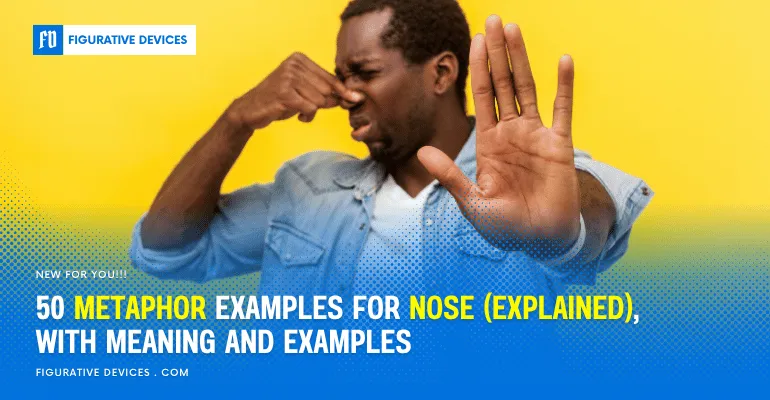

At 7 a.m., a face enters the mirror before the day enters the street; the nose stands at the center like a small landmark, taking breath, scent, cold air, warm soup, dust, rain, smoke, soap, and memory into 2 narrow doors. Its bridge gives the profile height, its nostrils give breathing rhythm, and its tip gives expression a visible point. These 50 nose metaphors turn that central facial feature into a compass, chimney, gate, hook, hill, whistle, lantern, and scent-reader, while the final 5 pair the nose with the mouth so smell, breath, taste, speech, lips, and profile stay balanced.
Listical: 50 Metaphors For Nose
- The face’s compass
- The scent antenna
- The breath gate
- The profile peak
- The nostril doorway
- The smell lantern
- The face’s handle
- The air funnel
- The scent needle
- The bridge of breath
- The weather vane of the face
- The memory catcher
- The aroma radar
- The center mast
- The scent keyhole
- The breathing chimney
- The flavor scout
- The profile signature
- The air sentinel
- The face’s front tower
- The sneeze cannon
- The soup detector
- The sniff trumpet
- The face’s doorknob
- The pickle pointer
- The honk button
- The nostril garage
- The sneeze volcano
- The snack periscope
- The face’s traffic cone
- Nose needle
- Scent hook
- Breath bridge
- Air beak
- Smell gate
- Face peak
- Sniff spark
- Profile peg
- Aroma pin
- Nostril cave
- The twin-window tower of breath
- The small hill where scent climbs first
- The living chimney that warms every breath
- The sharp prow sailing through cold air
- The front porch where smell knocks first
- The nose is the chimney, and the mouth is the fireplace
- The nose is the scout, and the mouth is the storyteller
- The nose is the doorway, and the mouth is the dining room
- The nose is the compass, and the mouth is the map legend
- The nose is the bell tower, and the mouth is the bell
What are the metaphors for nose?
The metaphors for nose are the face’s compass, the scent antenna, the breath gate, the profile peak, the nostril doorway, the smell lantern, the face’s handle, the air funnel, the scent needle, and the bridge of breath.
1. The Face’s Compass
Meaning:
The nose guides the face’s direction because it points forward and gives the profile a clear central line.
Example:
In a passport photo, the nose works like the face’s compass because its bridge and tip show the head’s angle in 1 glance.
Other ways to say:
Snout, beak, bridge, nostrils, muzzle, scent organ, profile point, face front, flat face, hidden profile, back of the head.
2. The Scent Antenna
Meaning:
The nose receives smell signals the way an antenna receives invisible waves.
Example:
At a bakery door, the nose becomes a scent antenna when warm bread, sugar, yeast, and butter reach the nostrils before the eyes find the counter.
Other ways to say:
Sniffer, nostrils, nasal bridge, scent receiver, smell organ, beak, nose tip, odor sensor, blocked nose, scentless face, covered profile.
3. The Breath Gate
Meaning:
The nose controls air entry, filters dust, and shapes breathing rhythm.
Example:
During a 5-kilometer run, the nose becomes a breath gate because steady nasal breathing keeps air moving in measured streams.
Other ways to say:
Nostrils, air passage, nasal gate, breathing channel, snout, bridge, face inlet, mouth-breath gap, closed nostrils, airless passage.
4. The Profile Peak
Meaning:
The nose rises from the face like a small peak and gives the side view its shape.
Example:
A sculptor measuring a clay bust studies the nose as the profile peak because 3 millimeters on the bridge changes the whole face line.
Other ways to say:
Bridge, beak, nose ridge, nasal peak, profile ridge, face summit, snout, flat plane, low profile, smoothed face.
5. The Nostril Doorway
Meaning:
The nostrils act like 2 small doors where breath and scent enter the body.
Example:
When winter air hits at 6 a.m., the nostril doorway tightens, warms the breath, and makes cold visible in short vapor clouds.
Other ways to say:
Nasal doors, nostrils, air holes, snout opening, nose vents, scent ports, bridge, sealed passage, blocked inlet, breath barrier.
6. The Smell Lantern
Meaning:
The nose reveals hidden scent details the way a lantern reveals shapes in darkness.
Example:
A chef testing curry uses the nose as a smell lantern because roasted cumin, ginger, garlic, and chili appear before 1 spoon reaches the tongue.
Other ways to say:
Scent lamp, aroma light, sniffer, nostrils, beak, nasal guide, smell finder, scentless mask, dull nose, blank air.
7. The Face’s Handle
Meaning:
The nose looks like the visible handle of the face because it projects outward and gives the face a graspable center.
Example:
In caricature art, the nose becomes the face’s handle because the artist enlarges its tip, bridge, and nostril curve for instant recognition.
Other ways to say:
Beak, snout, nose knob, nasal handle, profile grip, face hook, muzzle, flat center, smooth face, handleless profile.
8. The Air Funnel
Meaning:
The nose channels air into the nasal passages and narrows the flow.
Example:
On a dusty road, the nose becomes an air funnel because each nostril draws air through hair, mucus, and nasal tissue.
Other ways to say:
Nostrils, nasal funnel, air channel, snout, bridge, nose passage, breathing tube, open mouth, blocked funnel, sealed nose.
9. The Scent Needle
Meaning:
The nose points toward a smell with fine accuracy, like a needle finding direction.
Example:
At a market stall, the nose turns into a scent needle when roasted peanuts pull attention 4 steps before the vendor’s sign appears.
Other ways to say:
Beak, sniffer, scent pointer, nasal needle, nose tip, odor finder, profile point, blunt face, scentless point, hidden bridge.
10. The Bridge of Breath
Meaning:
The nose connects outside air with inside lungs through a raised facial bridge.
Example:
A yoga instructor’s slow inhale makes the nose the bridge of breath because air crosses from nostrils to throat in 4 counted beats.
Other ways to say:
Nasal bridge, snout, nostrils, breathing bridge, air ridge, face passage, beak, collapsed bridge, blocked airway, breathless gap.
What are the best metaphors for nose?
The best metaphors for nose are the weather vane of the face, the memory catcher, the aroma radar, the center mast, the scent keyhole, the breathing chimney, the flavor scout, the profile signature, the air sentinel, and the face’s front tower.
11. The Weather Vane of the Face
Meaning:
The nose senses air, season, dust, rain, smoke, and pressure changes before the rest of the face reacts.
Example:
Before rain starts, a street vendor may smell damp concrete through the nose, making it the weather vane of the face.
Other ways to say:
Sniffer, nasal vane, beak, nostrils, bridge, air sensor, scent point, covered nose, numb nostrils, scentless profile.
12. The Memory Catcher
Meaning:
The nose catches smells that trigger remembered places, meals, rooms, and seasons.
Example:
A whiff of school chalk and wooden desks makes the nose a memory catcher because 1 smell pulls a full classroom back.
Other ways to say:
Scent catcher, sniffer, nostrils, nasal memory, smell organ, beak, bridge, forgotten scent, blank nose, odorless air.
13. The Aroma Radar
Meaning:
The nose detects smell from different directions and identifies a source.
Example:
In a restaurant kitchen, the nose becomes aroma radar when it locates burnt toast before smoke reaches the ceiling alarm.
Other ways to say:
Scent radar, sniffer, nostrils, beak, nasal detector, odor scanner, smell sensor, blocked detector, dull nose, covered nostrils.
14. The Center Mast
Meaning:
The nose stands upright in the center of the face like a mast that gives structure.
Example:
A portrait painter marks the nose first because the center mast fixes 2 eyes, 2 cheeks, and 1 mouth in proportion.
Other ways to say:
Bridge, nasal mast, nose ridge, face pole, profile spine, beak, snout, flat middle, no ridge, low profile.
15. The Scent Keyhole
Meaning:
The nose gives a small opening into a wider world of hidden smells.
Example:
A perfume tester uses the nose as a scent keyhole because 1 narrow inhale opens layers of citrus, wood, amber, and smoke.
Other ways to say:
Nostrils, scent opening, nasal keyhole, smell port, snout, beak, air inlet, closed keyhole, blocked nostrils, sealed passage.
16. The Breathing Chimney
Meaning:
The nose moves air in and out like a chimney moving warm draft.
Example:
On a cold morning, the nose acts as a breathing chimney when warm air leaves the nostrils in 2 pale streams.
Other ways to say:
Nostril chimney, nasal vent, snout, beak, air stack, breath pipe, bridge, blocked vent, sealed nose, still air.
17. The Flavor Scout
Meaning:
The nose explores aroma before the mouth confirms taste.
Example:
During coffee tasting, the nose works as the flavor scout because roasted notes reach the nostrils before the first sip touches the tongue.
Other ways to say:
Sniffer, aroma scout, nostrils, smell guide, nasal taster, beak, scent organ, tasteless air, dull nose, blocked scent.
18. The Profile Signature
Meaning:
The nose gives the face a recognizable side-view mark.
Example:
In a silhouette cutout, the nose becomes the profile signature because its bridge and tip identify the face faster than the ear.
Other ways to say:
Nasal profile, bridge, beak, profile mark, face signature, snout, nose line, erased profile, flat outline, faceless curve.
19. The Air Sentinel
Meaning:
The nose guards breathing by filtering particles and noticing harmful smells.
Example:
Near a gas stove, the nose acts as an air sentinel because it detects a sharp leak smell before anyone sees danger.
Other ways to say:
Nasal guard, nostrils, air watcher, sniffer, beak, scent sentinel, smell alarm, blocked guard, numb nose, silent air.
20. The Face’s Front Tower
Meaning:
The nose rises at the front of the face and gives the facial plane height.
Example:
In side lighting, the nose becomes the face’s front tower because it casts the first shadow across the cheek.
Other ways to say:
Bridge, beak, nose tower, nasal rise, profile tower, snout, face ridge, flat face, low bridge, shadowless profile.
What are the funny metaphors for nose?
The funny metaphors for nose are the sneeze cannon, the soup detector, the sniff trumpet, the face’s doorknob, the pickle pointer, the honk button, the nostril garage, the sneeze volcano, the snack periscope, and the face’s traffic cone.
21. The Sneeze Cannon
Meaning:
The nose can fire a sneeze with sudden force and comic timing.
Example:
In a quiet library, 1 dust speck turns the nose into a sneeze cannon, and 12 heads lift from books.
Other ways to say:
Snout, nostrils, sneeze launcher, nasal cannon, beak, sniff tube, nose blast, quiet nose, blocked nostrils, still face.
22. The Soup Detector
Meaning:
The nose finds food aroma quickly, especially warm food.
Example:
At lunch, the nose becomes a soup detector when tomato, pepper, onion, and steam announce the bowl before the spoon appears.
Other ways to say:
Sniffer, aroma finder, nostrils, beak, nasal detector, smell sensor, food scout, cold nose, scentless spoon, blocked smell.
23. The Sniff Trumpet
Meaning:
The nose makes sniffing noticeable, almost like a tiny instrument.
Example:
During allergy season, the nose becomes a sniff trumpet when every 10 seconds brings a sharp nasal note.
Other ways to say:
Beak, snout, nostrils, nasal horn, sniff pipe, nose trumpet, air reed, silent nose, closed nostrils, muted profile.
24. The Face’s Doorknob
Meaning:
The nose sits at the face’s center like a round handle people notice first.
Example:
A cartoon artist draws the nose as the face’s doorknob when 1 bulbous tip carries the whole joke.
Other ways to say:
Nose knob, snout, beak, bridge, nostril handle, face handle, nasal button, flat face, handleless center, smooth profile.
25. The Pickle Pointer
Meaning:
The nose points toward strong, sour, or sharp smells with exaggerated focus.
Example:
At a deli counter, the nose turns into a pickle pointer because vinegar and dill pull it toward the jar before the order begins.
Other ways to say:
Beak, sniffer, scent pointer, nose tip, nasal arrow, pickle snout, odor hook, blunt face, blocked nose, scentless point.
26. The Honk Button
Meaning:
The nose resembles a playful button, especially in clownish or comic description.
Example:
A clown costume uses a red foam nose as a honk button because one squeeze turns the face into a joke in 1 second.
Other ways to say:
Nose button, snout, beak, nasal knob, face button, nostril bumper, comic nose, flat button, quiet face, no honk.
27. The Nostril Garage
Meaning:
The nostrils look like 2 small bays where air parks and leaves.
Example:
A child drawing a face may turn the nose into a nostril garage by making 2 dark oval doors under 1 triangle.
Other ways to say:
Nostril bays, nasal garage, air doors, snout, beak, nose holes, breath ports, closed doors, blocked garage, flat underside.
28. The Sneeze Volcano
Meaning:
The nose builds pressure and erupts during a sneeze.
Example:
After pepper lands on a plate, the nose becomes a sneeze volcano because the tickle rises, pauses, and bursts.
Other ways to say:
Sneeze crater, nostrils, snout, beak, nasal volcano, nose eruption, breath blast, calm nose, blocked crater, still nostrils.
29. The Snack Periscope
Meaning:
The nose lifts attention toward nearby food like a periscope rising to search.
Example:
At a cinema, the nose becomes a snack periscope when popcorn butter reaches row 6 before the bucket passes.
Other ways to say:
Sniffer, food periscope, beak, nostrils, scent scope, aroma finder, nose scout, lowered face, scentless air, blocked snout.
30. The Face’s Traffic Cone
Meaning:
The nose stands out in front and draws visual attention like a cone in a lane.
Example:
In a close-up selfie taken too near the lens, the nose becomes the face’s traffic cone because perspective makes it look 2 sizes larger.
Other ways to say:
Beak, bridge, snout, nasal cone, face cone, profile marker, nose point, flat road, hidden face, low bridge.
What are the short metaphors for nose?
The short metaphors for nose are nose needle, scent hook, breath bridge, air beak, smell gate, face peak, sniff spark, profile peg, aroma pin, and nostril cave.
31. Nose Needle
Meaning:
A nose needle is a nose that points sharply and clearly.
Example:
In a side-view sketch, a long pointed nose works as a nose needle because it marks the profile with 1 clean line.
Other ways to say:
Beak, bridge, nose point, nasal needle, snout, profile tip, scent point, blunt nose, flat bridge, rounded face.
32. Scent Hook
Meaning:
A scent hook is a nose that catches odors quickly.
Example:
Near a grill, the nose becomes a scent hook when smoke, salt, and char pull attention toward the food stand.
Other ways to say:
Sniffer, beak, nostrils, nasal hook, smell hook, aroma catcher, snout, scentless air, smooth face, blocked hook.
33. Breath Bridge
Meaning:
A breath bridge is a nose that connects outer air with inner breathing.
Example:
During meditation, the nose becomes a breath bridge when 4-second inhales and 4-second exhales pass through the nostrils.
Other ways to say:
Nasal bridge, snout, nostrils, air bridge, breathing ridge, face passage, beak, blocked bridge, closed nose, airless gap.
34. Air Beak
Meaning:
An air beak is a nose that projects forward and cuts into moving air.
Example:
On a bicycle ride, the nose becomes an air beak because wind strikes its tip before it reaches the cheeks.
Other ways to say:
Beak, snout, nose tip, nasal prow, profile point, air cutter, bridge, flat front, low profile, covered face.
35. Smell Gate
Meaning:
A smell gate is a nose that opens the body to scent.
Example:
At a flower shop, the nose becomes a smell gate when roses, soil, leaves, and water enter through 2 nostrils.
Other ways to say:
Nostrils, scent gate, nasal door, snout, beak, smell opening, air inlet, sealed gate, blocked nose, scentless wall.
36. Face Peak
Meaning:
A face peak is a nose that rises as the highest central feature.
Example:
Under noon light, the nose becomes the face peak because its bridge catches brightness before the lips and chin.
Other ways to say:
Bridge, beak, nasal peak, snout, profile summit, face ridge, nose rise, flat center, low bridge, smooth profile.
37. Sniff Spark
Meaning:
A sniff spark is a nose that starts attention with one quick smell.
Example:
When fresh paint opens in a room, the nose becomes a sniff spark because 1 sharp odor wakes the whole face.
Other ways to say:
Sniffer, nostrils, scent spark, nasal flash, beak, odor trigger, smell point, dull nose, blocked nostrils, blank air.
38. Profile Peg
Meaning:
A profile peg is a nose that fixes the outline of the face.
Example:
In shadow puppetry, the nose becomes a profile peg because its shape anchors the whole side silhouette.
Other ways to say:
Bridge, beak, nose peg, nasal point, profile marker, snout, face peg, erased outline, flat profile, hidden bridge.
39. Aroma Pin
Meaning:
An aroma pin is a nose that punctures the air and finds precise smells.
Example:
In a spice shop, the nose becomes an aroma pin when cardamom, cinnamon, clove, and pepper separate into 4 clear notes.
Other ways to say:
Sniffer, beak, nostrils, scent pin, nasal point, odor needle, smell finder, scentless point, blunt nose, closed nostrils.
40. Nostril Cave
Meaning:
A nostril cave pictures the nostril openings as small dark chambers.
Example:
In close portrait lighting, the underside of the nose forms a nostril cave because shadow gathers inside 2 round openings.
Other ways to say:
Nostrils, nasal cave, air holes, snout hollow, nose openings, breath pockets, beak, sealed cave, closed nostrils, flat underside.
What are the long metaphors for nose?
The long metaphors for nose are the twin-window tower of breath, the small hill where scent climbs first, the living chimney that warms every breath, the sharp prow sailing through cold air, and the front porch where smell knocks first.
41. The Twin-Window Tower of Breath
Meaning:
The nose has 2 nostrils that act like windows for air, and its bridge gives that airflow a raised tower shape.
Example:
During sleep testing, nasal airflow sensors measure the nose as a twin-window tower of breath because each nostril carries a separate stream.
Other ways to say:
Nasal tower, nostrils, bridge, snout, beak, breath windows, air vents, closed windows, blocked nose, flat tower.
42. The Small Hill Where Scent Climbs First
Meaning:
The nose rises before the mouth, cheeks, and chin, so scent reaches it first in facial experience.
Example:
When a cup of tea reaches the face, steam touches the nose before the lips, making it the small hill where scent climbs first.
Other ways to say:
Bridge, nose hill, nasal rise, beak, snout, scent slope, profile hill, flat face, low bridge, scentless slope.
43. The Living Chimney That Warms Every Breath
Meaning:
The nose warms, filters, and moistens air as it enters the body.
Example:
On a 2-degree morning, the nose becomes the living chimney that warms every breath because cold air feels softer after passing through the nasal passage.
Other ways to say:
Nasal chimney, nostrils, snout, beak, air warmer, breath vent, bridge, blocked vent, cold mouth, sealed nose.
44. The Sharp Prow Sailing Through Cold Air
Meaning:
The nose leads the face through wind like a boat’s prow leads through water.
Example:
A runner moving into winter wind has a nose like a sharp prow sailing through cold air because the tip receives the first bite.
Other ways to say:
Beak, nasal prow, snout, nose tip, bridge, air cutter, profile point, flat bow, covered face, low profile.
45. The Front Porch Where Smell Knocks First
Meaning:
The nose is the first facial place where scent arrives before taste, speech, or touch.
Example:
At a barbecue, smoke reaches the nose before the mouth tastes sauce, making the nose the front porch where smell knocks first.
Other ways to say:
Sniffer, nostrils, scent porch, nasal entry, beak, smell doorway, face front, back door, blocked porch, scentless air.
What are the metaphors for nose & metaphors for mouth?
The metaphors for nose and mouth are the nose is the chimney, and the mouth is the fireplace; the nose is the scout, and the mouth is the storyteller; the nose is the doorway, and the mouth is the dining room; the nose is the compass, and the mouth is the map legend; and the nose is the bell tower, and the mouth is the bell.
46. The Nose Is the Chimney, and the Mouth Is the Fireplace
Meaning:
The nose moves warm breath like a chimney, while the mouth holds heat, speech, food, and flavor like a fireplace holds flame.
Example:
After hot soup, steam rises toward the nose and warmth stays around the lips, so the nose becomes the chimney and the mouth becomes the fireplace.
Other ways to say:
Nostrils, bridge, snout, beak, lips, tongue, teeth, oral opening, sealed nose, closed mouth, silent lips.
47. The Nose Is the Scout, and the Mouth Is the Storyteller
Meaning:
The nose explores smell first, and the mouth explains taste, speech, and reaction after that discovery.
Example:
In coffee tasting, the nose scouts caramel and smoke, then the mouth tells the story through bitterness, warmth, and aftertaste.
Other ways to say:
Sniffer, scent scout, nostrils, beak, mouth, lips, tongue, voice, blocked nose, mute mouth, closed lips.
48. The Nose Is the Doorway, and the Mouth Is the Dining Room
Meaning:
The nose opens the first passage to aroma, and the mouth receives food, texture, and taste.
Example:
Before a pizza slice reaches the mouth, oregano and cheese enter through the nose, so the nose becomes the doorway and the mouth becomes the dining room.
Other ways to say:
Nasal door, nostrils, snout, beak, lips, teeth, tongue, palate, sealed nose, empty mouth, closed doorway.
49. The Nose Is the Compass, and the Mouth Is the Map Legend
Meaning:
The nose points toward scent, while the mouth gives meaning through taste and words.
Example:
At a spice counter, the nose points toward cumin, then the mouth names the flavor as earthy, warm, and sharp.
Other ways to say:
Bridge, beak, sniffer, profile point, mouth, lips, tongue, speech, scentless compass, wordless mouth, blank taste.
50. The Nose Is the Bell Tower, and the Mouth Is the Bell
Meaning:
The nose stands above and signals scent, while the mouth rings sound through speech, laughter, and breath.
Example:
During a public announcement, the nose shapes the face’s height, and the mouth carries the voice, making the nose the bell tower and the mouth the bell.
Other ways to say:
Nasal tower, bridge, nostrils, beak, mouth, lips, tongue, voice, silent bell, flat tower, closed mouth.